Best Books on Pitching (2026)
As an Amazon Associate I earn from qualifying purchases.
Pitching books split into a few camps. Some teach mechanics and fixes, some serve as coaching manuals for young arms, some lean on strategy and the mental side, and one looks at how analytics and technology reshaped the position. The right pick depends on whether you are a player, a parent, a coach or a fan, and on how much technical depth you want.
Best Books on Pitching: Our Top Picks

by Dan Blewett (Author), Alan Jaeger (Foreword), Lucas Cook (Producer) & 0 more Format: Paperback
Dan Blewett's Pitching Guide
A mechanics-first book that owners describe as clear and informative, with fixes for common delivery problems.
Read the full review
Ideal for: A player or parent who wants plain-language mechanics and fixes for common problems.
This is the pick for a pitcher who wants to understand why a delivery works. Owners say the explanations of proper mechanics are easy to follow, and that the book includes remedies for frequent mechanical flaws, which makes it useful for troubleshooting as well as learning.
It is illustrated in black and white and runs in a larger page format than most of the other picks. Compared with Nolan Ryan's Pitcher's Bible, it stays tighter on the mechanical side, while the Pitcher's Bible also covers the mental game and long-term performance.
Pros
- Clear explanations of mechanics
- Includes fixes for common problems
- Illustrated

by Tom House (Author), Jim Rosenthal (Author), Nolan Ryan (Author) & 0 more Format: Paperback
Nolan Ryan's Pitcher's Bible
A big, broad reference that owners call a good starter book with real attention to the mental side.
Read the full review
Ideal for: A developing pitcher who wants one broad reference to grow into.
The Pitcher's Bible is a weightier volume, the heaviest of the paperbacks here, and it reads as something to keep and return to. Owners call it a must-read reference and a good starter, and one says it suits a 14-year-old beginning to absorb the finer points.
It covers power, precision and long-term performance, so it reaches beyond a single delivery. Pick it over Pitching. Isn't. Complicated. when you want breadth and the mental game, and choose that title instead when you want a narrower focus on mechanical fixes.
Pros
- Broad coverage of the position
- Owners say it explains the mental side
- Works as a starter book
Cons
- Larger and heavier than most picks

by Jim Rosenthal (Author), Leo Mazzone (Author), Henry J. Aaron (Foreword) & 0 more Format: Paperback
Pitch Like A Pro
Written for young pitchers and the coaches who guide them, with a sensible approach to handling arms.
Read the full review
Ideal for: A youth coach or parent working with a developing pitcher.
This one speaks to two readers at once: the pitcher and the coach or parent. Owners call it excellent and say it takes a common-sense approach to handling pitchers and gives a look at coaching philosophy.
It is a light, illustrated paperback, much slimmer than the Pitcher's Bible. That makes it easier to hand to a young player, though it will not go as deep on training or analytics as Tom Seaver's The Art of Pitching or Unhittable.
Pros
- Aimed at both pitchers and coaches
- Common-sense approach to handling pitchers
- Light and illustrated

by Tom Seaver (Author) Format: Paperback
Tom Seaver's The Art of Pitching
A technical book from a pitching great that owners say opens with detailed workouts.
Read the full review
Ideal for: A committed pitcher who wants a workout-driven, technical approach.
Owners describe this as highly technical and say it gives a training program for both beginners and experienced pitchers, with workout routines up front. One owner mentions a son enjoying it, so it is not out of reach for younger readers who like detail.
If Pitch Like A Pro is the gentle coaching manual, this is the more demanding one. It suits readers who want a structured routine to follow rather than general advice.
Pros
- Detailed workouts near the start
- Technical depth
- Useful for beginners and experienced pitchers
Cons
- Technical content may be heavy for casual readers

by Tim Quiery (Author) Format: Paperback
Baseball Pitching Mastery
A compact guide for pitchers who want to become more dominant, from the author of a wider Baseball Mastery series.
Read the full review
Ideal for: A player who wants a short, focused guide to getting better.
This is an independently published paperback with a lighter, slimmer build than the Pitcher's Bible or Seaver's book. It is framed as a guide to improving as a pitcher and ties into pitcher training and coaching topics.
No owner feedback is listed, so there is less to go on than for Dan Blewett's guide or Pitch Like A Pro. Consider it when you want a smaller, more focused read.
Pros
- Slim and easy to carry
- Focused on becoming a stronger pitcher

by Branford McAllister (Author) Format: Paperback
The Tactics of Pitching
A strategy-focused book that treats pitching as art, science and tactics.
Read the full review
Ideal for: An advanced pitcher, catcher or coach interested in strategy.
Where most picks lean on mechanics or training, this one is about the thinking that goes into pitching: how to approach hitters and games. It is illustrated in black and white and is the lightest paperback of the group.
Pair it with a mechanics book such as Pitching. Isn't. Complicated. if you want both the delivery and the game plan. No owner feedback is listed for it.
Pros
- Strategy-first approach
- Illustrated
- Very light
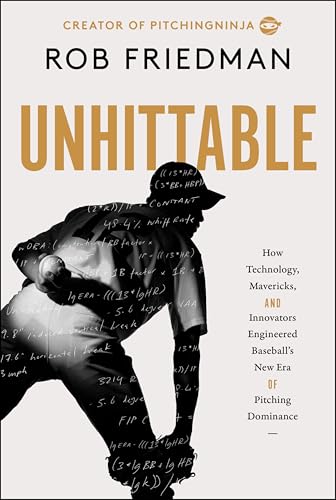
by Rob Friedman (Author) Format: Kindle Edition
Rob Friedman's Unhittable
A Kindle read on how technology and innovators changed pitching, not a how-to manual.
Read the full review
Ideal for: A baseball fan curious about analytics and pitch design.
This is the odd one out. It is about the new era of pitching dominance rather than teaching a delivery, and owners say it makes topics like pitch design, spin rate and analytics easy to follow.
Opinions are split, with some calling it essential reading for baseball fans and others finding it boring. Buy it to understand the modern game, and choose Dan Blewett's guide or Pitch Like A Pro if you want instruction.
Pros
- Makes analytics approachable
- Covers pitch design and spin rate
Cons
- Not an instructional book
- Some owners found it boring
Books on Pitching Compared
| Pick | Item weight | Item dimensions |
|---|---|---|
| #1 Dan Blewett's Pitching Guide | 1.15 pounds | 8.5 × 0.5 × 11 inches |
| #2 Nolan Ryan's Pitcher's Bible | 2.31 pounds | 7.38 × 0.5 × 9.25 inches |
| #3 Pitch Like A Pro | 0.5 pounds | 7 × 0.29 × 9 inches |
| #4 Tom Seaver's The Art of Pitching | 1.1 pounds | 8 × 0.45 × 9.25 inches |
| #5 Baseball Pitching Mastery | 0.53 pounds | 6 × 0.28 × 9 inches |
| #6 The Tactics of Pitching | 0.26 pounds | 6 × 0.18 × 9 inches |
| #7 Rob Friedman's Unhittable | — | — |
How to Choose a Pitching Book
Match the book to the reader
Start with who will read it. A young player and a coach need different things from a college-level pitcher or a fan.
- Young pitchers and coaches: Pitch Like A Pro
- Mechanics and fixes: Dan Blewett's guide
- Broad reference and mental game: Nolan Ryan's Pitcher's Bible
- Workouts and technical depth: Tom Seaver's The Art of Pitching
- Strategy: The Tactics of Pitching
- Understanding the modern game: Unhittable
Instruction or understanding
Most of these books teach you to pitch. Unhittable instead explains how pitching has changed through technology and analytics. If you want to improve a delivery, pick an instructional title; if you want context on today's game, pick Unhittable.
Format and size
These are mostly paperbacks, but they range from slim to hefty. The Pitcher's Bible is the heaviest, while The Tactics of Pitching is the lightest. Unhittable is a Kindle edition, so there is no page size to consider.
| Book | Format | Focus |
|---|---|---|
| Pitching. Isn't. Complicated. | Paperback | Mechanics |
| Nolan Ryan's Pitcher's Bible | Paperback | Broad reference |
| The Art of Pitching (Seaver) | Paperback | Training |
| Unhittable | Kindle | Modern game |
Books on Pitching FAQ
Which book is best for a young pitcher?
Pitch Like A Pro is written for young pitchers and their coaches, and Nolan Ryan's Pitcher's Bible has an owner who says it suits a 14-year-old starting to learn the finer points.
Which book covers the mental side of pitching?
An owner of Nolan Ryan's Pitcher's Bible says it explains the mental side of the game. The Tactics of Pitching also takes a strategy-focused view.
Does any of these books include workouts?
Owners say Tom Seaver's The Art of Pitching opens with detailed workouts as part of a training program.
Is Unhittable a how-to book?
No. It looks at how technology, innovators and analytics changed pitching, so it suits fans more than players looking for instruction.